
- Compare agents
- Online valuation
- Explore my area
- Home toolkit
- News & guides


- Estate agents by area
- Sold house prices by area
- Estate Agent ValuationRequest an in-person valuation with an agent to discover your property's true market value.
- Online Valuation ToolGet a free instant estimate of your home's value.
- EPC CheckerFind out if your home has a valid Energy Performance Certificate.
- Listing MonitorAlready on the market? See how your online property advert is performing.
- Selling guides
- Estate agent guides
- Mortgage advice
- Conveyancing guides
- Property news See All News & Guides
Agent shortlist
HouseWorth
Add value to your home02 January 2024
Can you use fence paint on decking?
Kimberley Taylor
Writer & Researcher
Estimated reading time: 11 minutes
Table of contents
- 1. At a glance
- 2. Can you use fence paint on decking?
- 3. How fence paint and decking treatments differ
- 4. Common decking problems when treatment is skipped
- 5. How to clean and prepare decking before treating
- 6. Cleaning timber deck boards
- 7. Cleaning composite decking
- 8. Preparing the surface
- 9. Choosing a treatment for your type of wood
- 10. Decking oil, paint, stain and protector compared
- 11. Decking oil and how to apply it
- 12. Decking paint and how to apply it
- 13. Deck stain and how to apply it
- 14. Decking protector
- 15. Does looking after your decking add value?
- 16. References
- 17. FAQs
At a glance
Can you use fence paint on decking? In theory you can, but in practice it rarely holds up. Fence paint is made for surfaces without foot traffic, so on a deck it soon peels and flakes, leaving marks and little protection. Purpose-made decking oil, stain, paint or protector last longer, guard against rot and give a far better finish, which makes them the smarter choice for most homeowners.
A well-kept deck can be one of the most enjoyable parts of a home, whether you are reading in the sun or hosting friends on a warm evening. Keeping it in good condition takes a little effort, though, and when the time comes to treat the timber, many people ask the same practical question: can you use fence paint on decking? It is a fair thing to wonder, because painting the fence and the deck in one go sounds like a tidy way to save time and money.
The short answer is that fence paint and decking are not a good match. You can apply it, but it is not built for the job, and the result rarely lasts. Below, we explain why, and walk through the treatments that genuinely protect timber deck boards, how to prepare your deck, and how to apply each option for a finish that holds up.
Can you use fence paint on decking?
In theory, yes. Fence paint will go onto deck boards, and it will add colour. In practice, though, it is rarely worth it. Fence paint is formulated for vertical surfaces that do not take any weight, such as fence panels, sheds and trellis. Those surfaces do not have people walking across them, dragging furniture over them or standing on them in wet shoes.
Decking is a completely different environment. It takes constant foot traffic, sits flat so water pools on it, and bakes in direct sun for much of the summer. Fence paint is thinner than products made for decks, so it tends to peel and flake once it is walked on. As it lifts, it can transfer onto shoes, pets and soft furnishings, and it offers very little of the protection that keeps timber from rotting.
So while the phrase can I use fence paint on decking comes up a lot, the more useful question is which product will actually protect your boards. Purpose-made decking oil, stain, paint and protector are designed to cope with wear, moisture and UV, which is why they last longer and look better.
How fence paint and decking treatments differ
The two products are made for very different jobs. The table below sets out the main differences at a glance.
| Feature | Fence paint | Decking treatments (oil, stain, paint, protector) |
|---|---|---|
| Designed for | Vertical panels with no foot traffic | Horizontal boards that take regular foot traffic |
| Durability underfoot | Low, tends to peel and flake | High, made to be walked on |
| Weather resistance | Limited | Stronger against rain, UV and frost |
| Slip resistance | Not usually considered | Many are formulated to reduce slipperiness |
| Protection against rot | Minimal | Soaks in or seals to help protect the wood |
| Finish over time | Patchy as it lifts | More even and longer lasting |
Common decking problems when treatment is skipped
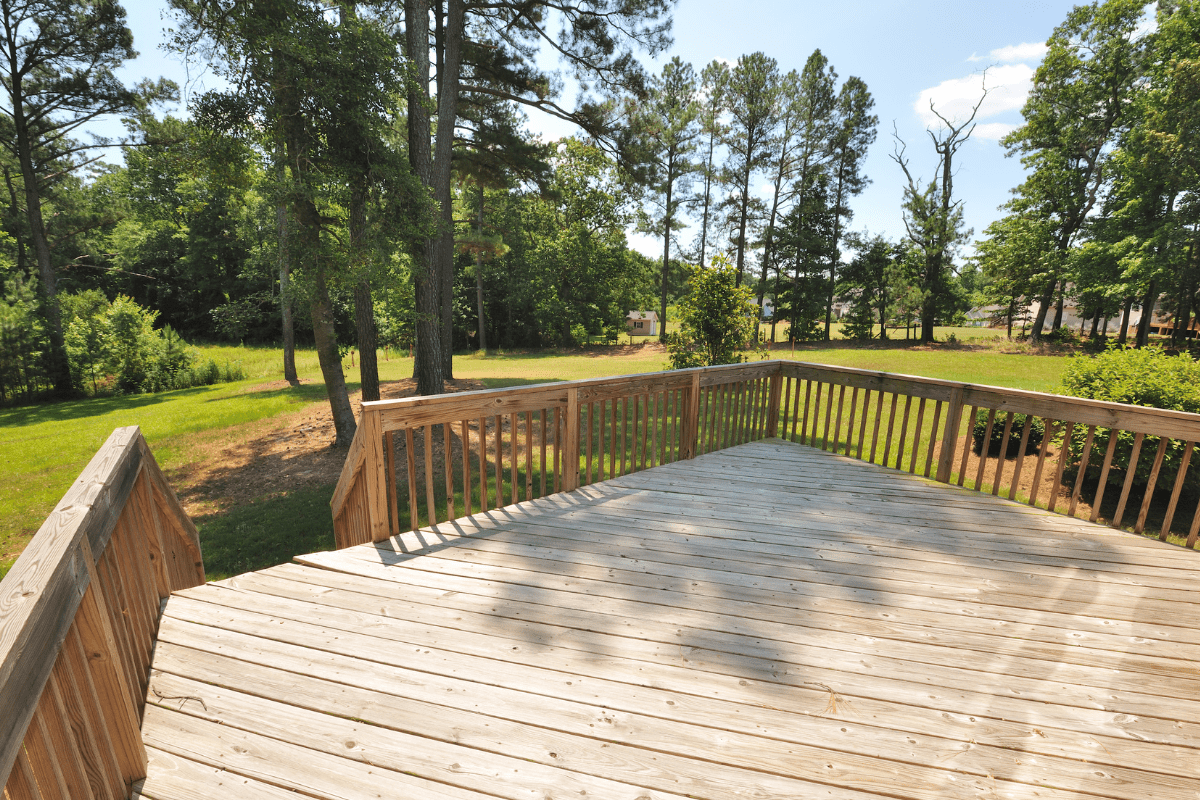
Timber is the most common decking material, and it needs protecting from the elements. Left untreated, wood absorbs moisture, dries out in the sun and moves with the seasons. Over time that can lead to splintering, cracking, cupping and discolouration.
The more serious concern is rot. Once damp gets into untreated timber and stays there, the wood can begin to decay, which weakens the structure and can make a deck unsafe to use. Regular cleaning and the right treatment go a long way towards preventing this, which is why choosing a proper decking product over fence paint matters more than it might first appear.
It is also worth knowing that some decking work can need permission. Raised decking, or decking that covers a large part of your garden, may need planning permission, so it is sensible to check the rules before building or extending a deck.
How to clean and prepare decking before treating
Whichever treatment you choose, preparation makes the difference between a finish that lasts and one that fails early. Aim to clean your deck once or twice a year as part of general upkeep, and treat only a clean, dry surface.
Cleaning timber deck boards
Start by sweeping the boards with a stiff broom to lift loose dirt and debris. Cover nearby plants and grass with a plastic dust sheet so cleaning detergent does not damage them. If there is any mould, treat that first with a suitable mould remover, as cleaning over mould before removing it can spread the spores and leave you back where you started. Next, apply a timber decking cleaner across the surface and work it in with a stiff brush. Leave it for around 20 minutes, then rinse thoroughly with clean water using a garden hose or a pressure washer on a gentle setting.
Cleaning composite decking
Composite decking is made from recycled wood fibres and plastic, so it does not suffer the same problems as timber. It usually needs far less attention, often just an occasional brush with warm soapy water. Composite boards are not treated with oils, stains or paints in the way timber is, so most of the treatment advice below applies to timber decks rather than composite ones.
Preparing the surface
Once the deck is clean and dry, remove any old, flaking layers of stain or paint with a scraper, or sand them back. Work in the direction of the grain to avoid scratching across the timber. A smooth, bare surface gives the new treatment the best chance to bond and soak in.
Choosing a treatment for your type of wood
The right approach depends partly on the wood your deck is made from. The table below is a quick guide, followed by a little more detail on the trickier types.
| Wood type | Examples | What to know |
|---|---|---|
| New decking | Pre-treated softwood | Usually leave around six months to weather, then seal cut ends with an end grain protector |
| European softwoods | Scots pine, maritime pine, Norway spruce | Sensitive to the weather, so treat regularly. Any treatment can suit |
| European hardwoods | Oak, sweet chestnut, black locust | Tougher, but tannins can mark the finish if the wood is not treated regularly |
| Exotic woods | Teak, mahogany, ipe | Dense and naturally oily, so use a penetrating oil made for that species |
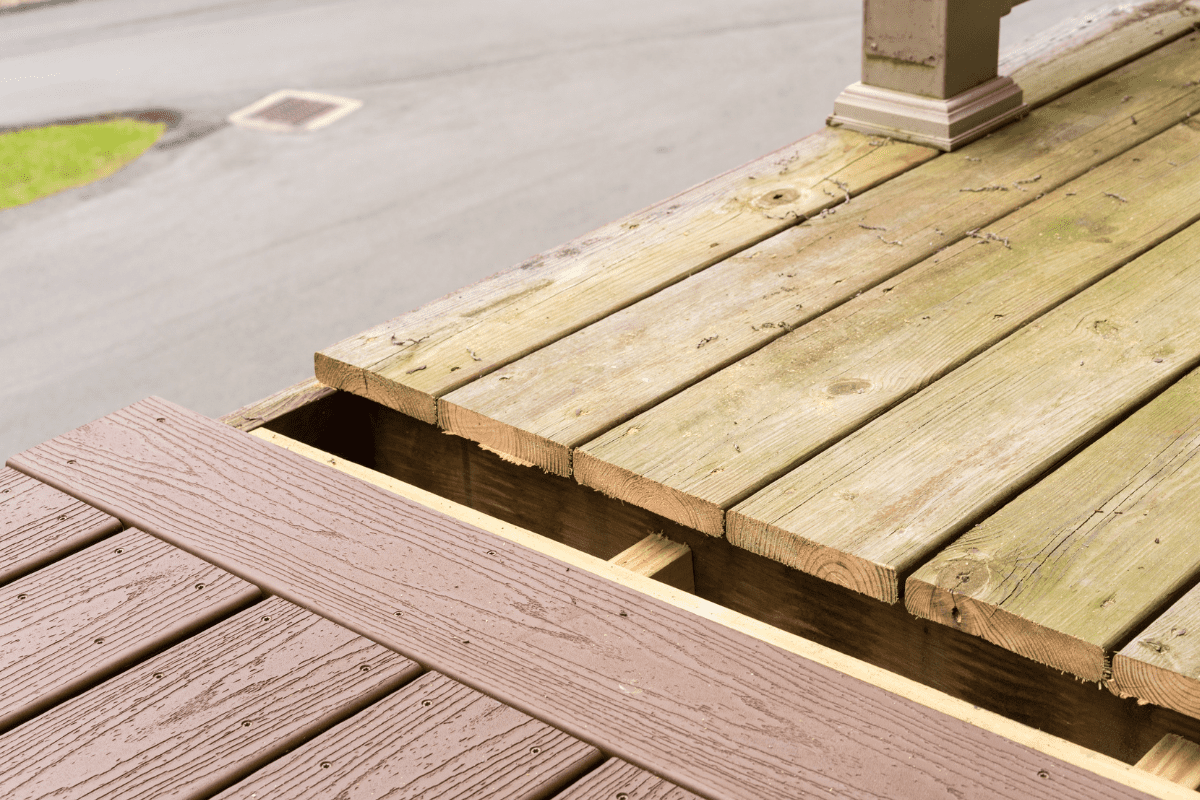
New decking usually arrives pre-treated, so it is generally best to leave it for around six months to weather naturally before adding further treatment. The exposed cut ends are the exception, as they are the most vulnerable to moisture. Sealing them with an end grain protector as the deck is installed helps stop water seeping in and warping or splitting the boards.
Exotic woods such as teak, mahogany and ipe are very dense and naturally oily, which helps them resist rot and even insects. They still fade in the sun, though, and their oil content can make standard products hard to apply. A penetrating wood oil designed for that specific timber tends to work best.
Decking oil, paint, stain and protector compared
There are four main ways to treat a timber deck, and each gives a different look and level of protection. The table sets out how they compare, and the sections below explain how to apply each one.
| Treatment | How it works | Best for | Notes |
|---|---|---|---|
| Decking oil | Soaks into the timber to form a water-resistant and dirt-resistant barrier | Most timber decks, natural look | Enhances the grain, often the least slippery finish |
| Decking paint | Sits on the surface as a coloured, protective film | Covering worn or grey wood, bold colour | Thicker, lower coverage, hides the grain |
| Deck stain | Sits on the surface, adds colour while the grain shows through | Colour with visible grain | Suits most timber, though not exotic woods |
| Decking protector | Clear, breathable barrier that repels moisture and UV | Keeping the natural colour | Translucent, not usually for exotic woods |
Decking oil and how to apply it
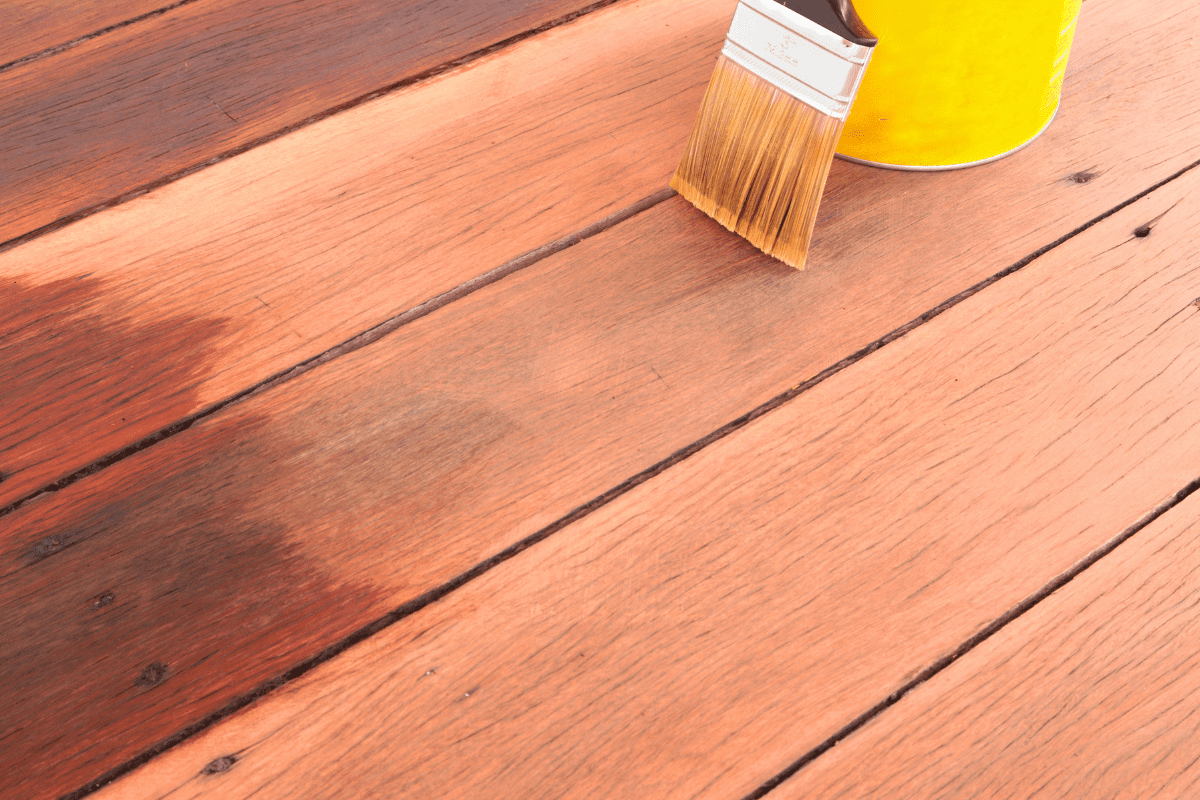
Decking oil protects boards from drying, splitting, warping, swelling and fading by soaking into the timber to form a water-resistant and dirt-resistant barrier. It slows decay, helps the wood last longer, and is generally the least slippery of the treatments, which is useful underfoot. It also comes in a range of wood tones that lift the natural grain.
Before applying, clean the deck and strip off any old oil, stain or paint. To estimate how much you need, measure the deck in square metres (width multiplied by depth) and check the coverage stated on the tin. It is worth buying a little extra, as timber can soak up more than expected. If you need more than one tin, mix them together in a bucket first so the colour stays consistent.
Apply with a brush or paint pad, without overloading it. Using long strokes, start in the back corner and work forwards in the direction of the grain, focusing on about four boards at a time to avoid overlap marks. Try not to walk on wet oil. Leave around four hours before a second coat, then allow roughly 24 hours to dry fully. It is worth checking the tin, as times vary by product.
Decking paint and how to apply it
Decking paint sits on top of the boards, creating a water- and dirt-resistant film that shields the wood from the weather and helps prevent rot. It fills small cracks, smooths rough patches, covers grey or tired timber and gives an even, non-grainy finish in whatever colour you choose.
Preparation is the same: clean and strip the deck, then work out how much paint you need. Because paint is thicker than oil or stain, coverage per tin is usually lower. You can apply it with a brush, pad, roller or sprayer.
With a roller, stir the paint to an even colour, pour it into a tray without overloading, then start in the back corner and move forwards, turning the roller as you go and focusing on four boards at a time. Go back over each section to keep the finish even and avoid pooling. With a sprayer, work from the top down, spraying railings first, then the boards one at a time, keeping the sprayer moving to prevent drips and runs. A brush is handy for smoothing out any spots. Leave four hours before a second coat, and check the tin for drying times.
Deck stain and how to apply it
Deck stain also adds colour, but because the colour is more translucent, the grain shows through. Like paint, it sits on the surface to form a barrier against the weather and slows the timber's ageing. It comes in natural wood tones and clearer shades, and suits most wooden decking apart from exotic woods.
You can apply stain like an oil, using a brush or pad, or like a paint, using a roller or sprayer. Whichever you choose, work in the direction of the grain, avoid overlapping layers, and do not apply more than the wood can absorb. A second coat can usually go on after around four hours, though the tin will confirm.
Decking protector
Decking protector gives a clear, breathable barrier that repels moisture while still letting the wood weather naturally. It helps guard against water damage, UV and the wear of foot traffic. Because it is translucent, it keeps the natural colour of the timber rather than changing it. Like stain, it suits most wooden decking apart from exotic woods.
Does looking after your decking add value?
A tidy, well-maintained deck can lift the appeal of a garden, and outdoor space is something many buyers look for. While no single feature guarantees a higher price, presentation matters, and a deck that looks cared for tends to make a stronger first impression than one that is grey and peeling. If you are curious about local values, you can check what similar homes have recently sold for to get a sense of your market.
When it does come time to sell, the agent you choose makes a real difference to how smoothly things go and the result you achieve. You can compare local estate agents by their performance selling homes in your area to find one whose results reflect the fee they charge. For more on getting a property ready, this guide to home improvements that add value is a helpful starting point.
References
FAQs
Can fence paint be used on decking?
You can apply fence paint to a deck, but it is rarely worth doing. Fence paint is made for vertical surfaces such as panels and sheds, which do not take any foot traffic. On a deck, where people walk and furniture is moved around, it tends to peel and flake fairly quickly. As it lifts, it can transfer onto shoes and soft furnishings, and it offers little of the rot protection that timber underfoot needs. A product made for decks, whether oil, stain, paint or protector, is designed to cope with wear, moisture and sun, so it usually lasts longer and gives a better result for a modest extra cost.
What is the difference between fence paint and decking paint?
The main difference is durability. Fence paint is thinner and formulated for surfaces that are not walked on, so it is not built to withstand foot traffic, standing water, or the constant movement timber goes through outdoors. Decking paint is thicker, tougher and designed to sit on boards that take daily wear. It creates a more robust barrier against the weather, helps prevent rot, and often includes properties that reduce slipperiness. Decking paint also tends to give a more even, longer-lasting finish on a surface underfoot. Using the right product for the job usually saves time and money in the long run, because you repaint far less often.
How often should I treat my decking?
As a general guide, many timber decks benefit from a fresh coat of oil, stain or paint once a year, though this can vary with the product, the wood and how exposed the deck is. Decks in full sun or heavy rain may need attention more often, while sheltered ones can go longer. Cleaning once or twice a year helps too, clearing dirt, moss and algae before they build up. A simple test is to splash a little water on the boards. If it soaks straight in rather than beading, the timber is likely ready for another treatment. It is worth checking the manufacturer's guidance, as recommended intervals differ between products.
Is decking oil or decking paint better?
Neither is better outright, as it depends on the look and finish you want. Decking oil soaks into the timber, enhances the natural grain and tends to be the least slippery option, which many people prefer for a natural appearance. It is also easy to top up. Decking paint sits on the surface, offers a wider range of solid colours and can cover tired, grey or uneven wood, but it hides the grain and can show wear where foot traffic is heaviest. If you love the natural wood look, oil is often the choice. If you want bold colour or need to disguise older boards, paint may suit you better.
Can you paint over old decking oil or stain?
It is generally best to remove or thoroughly prepare old coatings before applying something new, rather than painting straight over them. Oil and stain can prevent fresh paint from bonding properly, which leads to peeling later. The usual approach is to clean the deck, then scrape or sand back any flaking or glossy areas, working in the direction of the grain. If you are moving from an oiled deck to a painted finish, extra preparation is often needed, as residual oil can stop paint adhering. Checking the guidance on both the old and new products helps, and a small test area can show how well the new treatment takes before you commit to the whole deck.
Do I need planning permission for decking?
In many cases, decking falls under permitted development and does not need permission, but there are exceptions. Decking that is raised above a certain height, or that covers a large proportion of your garden, can require planning permission, and rules may differ in conservation areas or for listed buildings. Because the thresholds can vary, it is sensible to check the current guidance on the Planning Portal or with your local council before you build or extend a deck. Taking a few minutes to confirm the position can save trouble later, particularly if you plan to sell, when buyers and their conveyancers may ask about work that has been carried out.
How long does decking treatment take to dry?
Drying times vary by product, weather and how many coats you apply. As a rough guide, many decking oils can take around four hours between coats and roughly 24 hours to dry fully, while paints and stains often follow a similar pattern. Warm, dry conditions speed things up, whereas damp or cold weather slows drying considerably. It is worth planning treatment for a spell of settled, dry weather and avoiding walking on the deck or replacing furniture until it has fully cured. It is worth checking the tin, as the manufacturer's stated times are the most reliable, and rushing a second coat can spoil the finish.
How much
is your home worth?
It’s always worth knowing the value of your home. Discover the price of your property with an instant valuation. GetAgent tracks the figures, so you don’t have to.
How much
is your home worth?
It’s always worth knowing the value of your home. Discover the price of your property with an instant valuation. GetAgent tracks the figures, so you don’t have to.

Compare estate agents
It takes 2 minutes.




Get in touch
020 3608 6556
Our lines are closed
We are a company registered in England & Wales, company number 09428979.
Copyright © 2026 GetAgent Limited